
What Does NAD Do in the Body: The Science Behind Cellular Energy
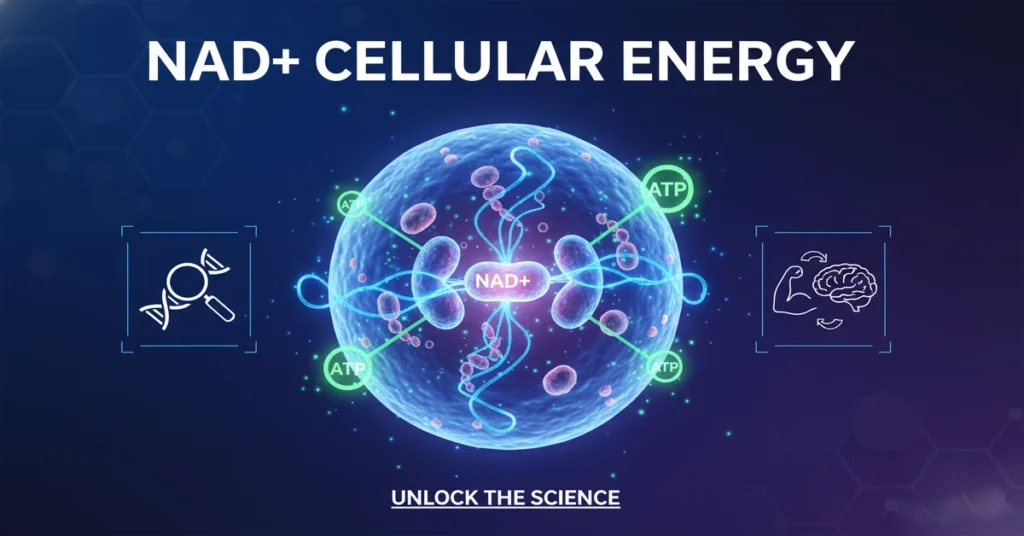
What Does NAD Do in the Body: The Science Behind Cellular Energy November 11, 2025 nithin-dinesh Nicotinamide adenine dinucleotide (NAD⁺) is a coenzyme essential for life. It drives energy production, regulates metabolism, and supports the body’s natural repair systems. Though often promoted as an “anti-ageing molecule,” its biological functions are deeply rooted in evidence-based biochemistry. The Role of NAD⁺ in Cellular Metabolism NAD⁺ is a redox coenzyme that transfers electrons between metabolic reactions. In glycolysis and the Krebs cycle, NAD⁺ accepts electrons and becomes NADH. NADH then delivers these electrons to the mitochondrial electron transport chain, where ATP (adenosine triphosphate) is produced – the molecule that powers nearly all cellular processes. This constant conversion between NAD⁺ and NADH keeps energy flowing. Without sufficient NAD⁺, energy generation declines, and cellular efficiency falters. Reference: Titov D. V. et al., Complementation of mitochondrial electron transport chain by manipulation of NAD⁺/NADH ratio, Science, 2016 Declining NAD⁺ Levels and Their Consequences As humans age, NAD⁺ levels decrease due to chronic inflammation, oxidative stress, and DNA damage. This decline is associated with slower metabolism and reduced mitochondrial function. Studies show that maintaining adequate NAD⁺ is critical for preserving cellular vitality and metabolic balance. However, the degree of NAD⁺ loss and its tissue-specific variations remain active research topics. Reference: NAD+ metabolism and its roles in cellular processes during ageingAnthony J. Covarrubias, Rosalba Perrone, Alessia Grozio & Eric Verdin. Beyond Energy: NAD⁺ as a Regulator of Cellular Repair Beyond its metabolic role, NAD⁺ serves as a substrate for enzymes responsible for cellular repair and regulation. Two key enzyme groups rely heavily on NAD⁺: Sirtuins, which influence mitochondrial biogenesis, inflammation, and gene expression. PARPs (poly[ADP-ribose] polymerases), which assist in repairing damaged DNA. When DNA damage increases, PARP activity rises, consuming large amounts of NAD⁺. This can lead to local depletion of NAD⁺, impairing mitochondrial function and cellular recovery. Reference: Choi J. E. et al., Sirtuins, metabolism, and DNA repair, Frontiers in Cell and Developmental Biology, 2022 How the Body Maintains NAD⁺ Levels Cells regenerate NAD⁺ through several metabolic pathways. The salvage pathway recycles nicotinamide into NAD⁺ via nicotinamide mononucleotide (NMN). The de novo pathway synthesizes NAD⁺ from tryptophan. Additional compartmentalized pathways ensure NAD⁺ is available in the cytosol, nucleus, and mitochondria. Over time, increased activity of enzymes such as CD38 and PARP1 can accelerate NAD⁺ breakdown, contributing to age-related declines. CD38, in particular, is now recognized as a major regulator of NAD⁺ degradation in mammals. Reference: Migaud M. E. et al., Regulation of and challenges in targeting NAD⁺ metabolism, Nature Reviews Drug Discovery, 2024. Can NAD⁺ Be Replenished? Efforts to restore NAD⁺ through supplementation and IV therapy are growing in popularity. Molecules such as nicotinamide riboside (NR) and nicotinamide mononucleotide (NMN) serve as NAD⁺ precursors and have demonstrated potential to raise NAD⁺ levels in animal models. Human studies, however, have shown variable results. While some clinical trials report improvements in metabolic function, others find minimal changes. Factors such as dosage, absorption route, and individual baseline NAD⁺ levels likely influence effectiveness. Maintaining NAD⁺ Naturally Lifestyle factors significantly affect NAD⁺ metabolism. Regular exercise, sufficient sleep, and a balanced diet all promote mitochondrial health. Caloric moderation and intermittent fasting can stimulate sirtuin activity, preserving NAD⁺ levels naturally. Conversely, chronic stress and poor diet accelerate NAD⁺ depletion. Conclusion NAD⁺ is indispensable for energy production, cellular repair, and healthy ageing. While supplementation and intravenous therapy may enhance NAD⁺ availability, they should be viewed as complementary to, not replacements for, evidence-based lifestyle strategies. Maintaining cellular NAD⁺ through proper nutrition, exercise, and stress management remains the most reliable foundation for metabolic health and longevity. Curious how NAD⁺ IV therapy can support cellular energy and recovery? Learn more about our clinically designed NAD IV drips here. Previous PostNext Post Declining NAD⁺ Levels with Age Why Supplementation Matters November 13, 2025 | by anita-tamang Read More → What Does NAD Do in the Body: The Science Behind Cellular Energy November 11, 2025 | by nithin-dinesh Read More → Top 7 Benefits of Getting an IV Drip at Home in Dubai for Better Health and Wellness November 7, 2025 | by anita-tamang Read More → Schedule Your IV Drip Today Licensed nurses and DHA-approved services – your wellness starts with one drip. Call Now WhatsAPP
What Does NAD Do in the Body: The Science Behind Cellular Energy Read More »