Foods That Support Your Body’s Natural NAD+ Production
Your body makes NAD+ on its own, but the process slows with age, chronic stress, poor sleep, and inflammation. You can support this natural production through certain nutrients that feed the biochemical pathways responsible for building and recycling NAD+.
No miracle foods. Just smart choices that give your cells the raw material they need.
Here are the foods that actually help.
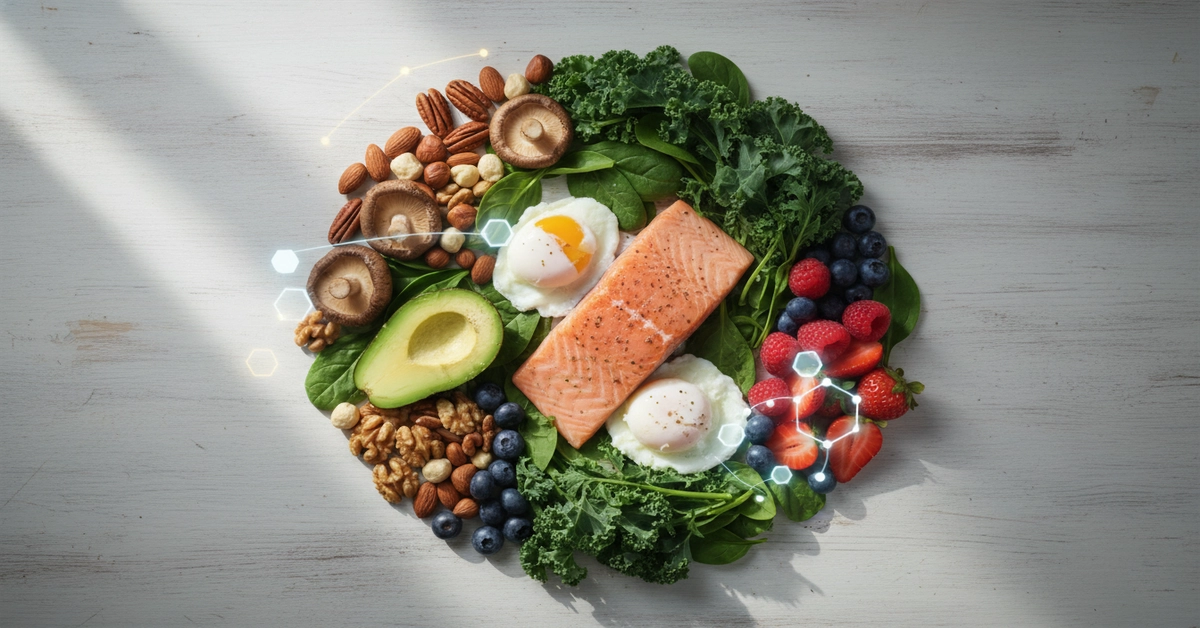
1. Foods Rich in Tryptophan
Tryptophan is an amino acid that your body can convert into NAD+ through a pathway called the kynurenine pathway.
You may know tryptophan for its role in serotonin, but it is also one of the most reliable NAD+ precursors.
Top sources include:
• Turkey and chicken
• Eggs
• Salmon and tuna
• Pumpkin seeds
• Sunflower seeds
• Soybeans
• Oats
These foods support long, steady NAD+ production because tryptophan is used continuously throughout the day.
2. Foods High in Niacin (Vitamin B3)
Niacin is the most direct building block for NAD+. Your body converts it efficiently through the salvage pathway.
Look for:
• Chicken breast
• Beef liver
• Tuna
• Salmon
• Brown rice
• Peanuts
• Whole wheat products
• Mushrooms
People who eat enough niacin generally have healthier baseline NAD+ levels.
3. Foods Containing NR and NMN Precursors
Nicotinamide riboside (NR) and nicotinamide mononucleotide (NMN) are newer NAD+ precursors that have become popular in supplements. They also occur naturally in small amounts.
Food sources include:
• Cow’s milk
• Yogurt
• Avocado
• Broccoli
• Cabbage
• Edamame
• Cucumbers
These foods will not spike NAD+, but they support its quiet, steady recycling.
4. Foods That Reduce NAD+ Drain
NAD+ is not only produced. It is also constantly used and consumed. Some foods help lower oxidative stress and inflammation, which reduces the rate at which NAD+ gets burned.
Supportive foods include:
• Blueberries
• Strawberries
• Raspberries
• Red grapes
• Dark leafy greens
• Green tea
• Turmeric
They help protect cells, which indirectly preserves NAD+.
5. Foods Supporting Mitochondrial Health
Healthy mitochondria use NAD+ more efficiently. Improving mitochondrial function helps your body get more energy out of each molecule.
Supportive foods:
• Olive oil
• Nuts and seeds
• Sardines
• Eggs
• Sweet potatoes
• Cauliflower
These foods contain nutrients such as omega 3s, healthy fats, and antioxidants that strengthen mitochondrial membranes.
6. Foods Rich in Polyphenols That Activate Sirtuins
Sirtuins require NAD+ to work. They also help regulate NAD+ levels. Certain foods activate sirtuins and encourage NAD+ recycling.
Key sources:
• Red onions
• Kale
• Green tea
• Dark chocolate (80 percent and above)
• Coffee
• Extra virgin olive oil
• Parsley
• Capers
These foods do not supply NAD+ directly but help the systems that depend on it.
How This Comes Together
Supporting NAD+ naturally means eating in a way that:
• provides raw building blocks
• reduces unnecessary NAD+ consumption
• strengthens mitochondria
• encourages NAD+ recycling
You are not trying to “boost” anything. You are giving your cells the inputs they already know how to use.
A Simple Daily Meal Pattern That Helps NAD+
Here is one example of a day structured around NAD+ friendly foods:
Breakfast
Oats with pumpkin seeds and blueberries
Greek yogurt on the side
Lunch
Grilled chicken or salmon
Steamed broccoli and edamame
Olive oil dressing
Snack
Green tea and a handful of nuts
Dinner
Eggs with sautéed spinach
Brown rice or sweet potato
Dark chocolate square after meals
Small, realistic changes can support your body’s natural NAD+ pathways over time.