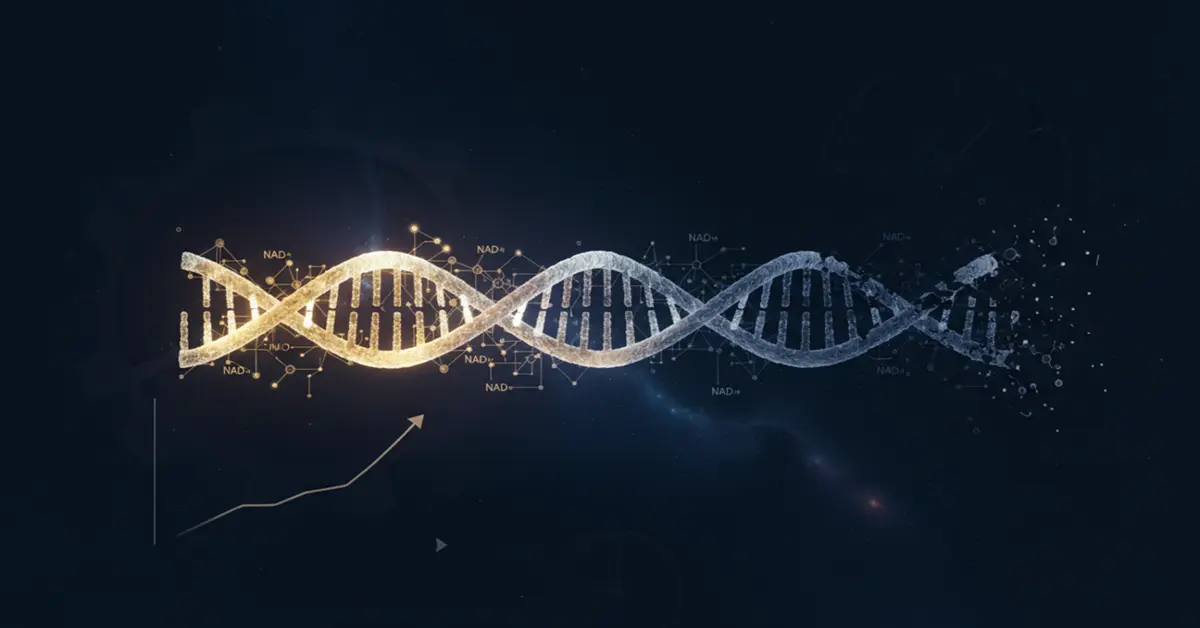
Aging is not simply the passing of time. It is a gradual decline in cellular efficiency – a process shaped by thousands of biochemical reactions that either sustain vitality or slowly erode it. Among the most critical molecules governing this balance is nicotinamide adenine dinucleotide (NAD⁺), a coenzyme central to energy metabolism and DNA repair.
Over the years, scientists have observed one consistent pattern: NAD⁺ levels drop dramatically as we age, contributing to fatigue, slower recovery, and increased vulnerability to chronic disease. Understanding why this happens, and what can be done about it, opens a new perspective on longevity science.
The Science of NAD⁺ Decline
NAD⁺ is a molecular currency used in countless reactions that keep cells alive. It shuttles electrons in the mitochondria to produce ATP, the energy every cell depends on. Yet studies show that NAD⁺ levels in human tissues can decline by up to 50% between early adulthood and old age (Yoshino et al., Cell Metabolism, 2018).
Why? Several culprits work together:
Reduced synthesis: The enzymes that build NAD⁺, such as NAMPT, become less active over time.
Increased consumption: As oxidative stress and inflammation rise with age, enzymes like PARPs and CD38 consume NAD⁺ at higher rates.
DNA damage: Chronic damage from free radicals activates NAD⁺-dependent repair processes, further draining cellular reserves.
In other words, aging cells are forced to spend more NAD⁺ than they can replenish.
The Longevity Connection
Declining NAD⁺ doesn’t just reduce energy, it rewires how cells function.
Low NAD⁺ interferes with sirtuin activity, the family of enzymes responsible for regulating stress resistance, inflammation, and mitochondrial health. Research from Harvard’s Sinclair Lab links NAD⁺ decline to the loss of youthful gene expression patterns, sometimes described as “epigenetic drift” (Imai & Guarente, Trends in Cell Biology, 2014).
Maintaining NAD⁺ balance appears essential for:
Preserving mitochondrial performance
Supporting DNA repair and genomic stability
Reducing age-related inflammation (inflammaging)
Enhancing metabolic flexibility
This is why NAD⁺ metabolism has become a cornerstone topic in modern longevity research.
Can NAD⁺ Be Restored?
Yes, at least partially. Researchers have explored ways to replenish cellular NAD⁺ through precursor supplementation (like NMN and NR), lifestyle optimization, and direct NAD⁺ delivery via IV therapy.
For example, clinical trials show that NMN supplementation can elevate NAD⁺ levels and improve muscle insulin sensitivity in older adults (Yoshino et al., Science, 2021).
However, oral precursors must pass through digestion and liver metabolism before reaching cells. NAD⁺ IV therapy, on the other hand, delivers the molecule directly into the bloodstream, allowing for faster uptake and potentially higher systemic availability.
Looking for a clinically guided way to replenish NAD⁺ and support healthy aging? Learn more about our NAD IV Therapy options.
A Future of Cellular Resilience
The decline of NAD⁺ is not an inevitable surrender – it’s a signal. It tells us that our cells are under stress and losing the biochemical balance that once kept them resilient. Supporting NAD⁺ metabolism through scientifically backed strategies could slow this decline and help preserve vitality well into later life.
For those seeking evidence-based longevity care, restoring NAD⁺ levels may be one of the most promising frontiers in modern preventive medicine.
Explore how NAD IV therapy can help restore cellular energy and optimize aging from the inside out.
The Biochemistry of Hydration: Why IV Fluids Work Faster
IV Therapy at Home for Travelers & Jet Lag Recovery in Dubai
Struggling With Fatigue? NAD Therapy May Be the Energy Reset Your Body Needs
How Trimethylglycine Supports Cellular Health and Immune Balance
Author
-
Anita Tamang — DHA-Licensed Assistant Nurse
JPR Home Health Care, DubaiAnita Tamang is a DHA-licensed Assistant Nurse at JPR Home Health Care, Dubai, specializing in IV therapy for women’s wellness, recovery, and beauty enhancement. As part of SMR IV Drip, a sub-brand of JPR dedicated to advanced infusion therapy, she focuses on delivering nutrient-rich IV treatments that support skin radiance, hormonal balance, energy renewal, and overall vitality.
Anita combines clinical precision with a deep understanding of women’s health and aesthetic goals. She ensures every infusion—from glow-boosting drips to restorative wellness blends—is performed safely, effectively, and with a personal touch. Her approach emphasizes comfort, trust, and visible wellness outcomes.
Originally from Nepal and holding a Diploma in Nursing since 2022, Anita brings over two years of experience in hydration therapy, post-procedure recovery, and home-based IV wellness care. Since joining JPR in February 2025, she has become a trusted professional for women seeking medical-grade rejuvenation in the comfort of their homes.
Core Competencies:
- Safe administration of SMR IV Drips for female wellness, beauty, and recovery
- Expertise in hydration, glow, and energy IV formulations
- Monitoring client response and ensuring post-infusion comfort
- Home-based hormonal balance and metabolic support therapy
- Nutrient replenishment for skin, hair, and body rejuvenation
- Additional strengths in post-surgical recovery, wound care, and elderly wellness
Anita is recognized for her gentle technique, strong client rapport, and commitment to female-centered care, making her a valued part of the SMR IV Drip team and a preferred nurse among Dubai women seeking safe, effective, and aesthetic-focused IV therapy.
DHA License: 07412774-001
DHA Profile: View Profile